
Body, mind and the nervous system
Coldwater and the nervous system: what a cold plunge does and does not do
Scroll to explore
The cold is not the point. Learning that you can meet something intense on purpose, and stay steady inside it, is the point.
The short answer
In short
Cold water immersion produces a sharp stress response followed by a period of elevated alertness and improved mood, driven by a large rise in noradrenaline and dopamine. Research supports short-term effects on alertness, mood and perceived recovery from exercise, with weaker evidence for longer-term mental health benefit. It carries real risks for people with heart conditions, uncontrolled blood pressure, epilepsy or pregnancy, and should never be done alone or after drinking.
- Typical water temperature
- 10 to 15 degrees Celsius for beginners
- Typical duration
- One to three minutes is enough for most effects
- Best supported effect
- Short-term alertness and mood lift
- Main hazard
- Cold shock response in the first 30 to 60 seconds
- Never
- Alone, after drinking, or while jumping in head first
Published 2026-08-28 · All resources
What happens in the first minute
Entering cold water triggers the cold shock response almost immediately. There is an involuntary gasp, breathing rate jumps, heart rate and blood pressure rise, and blood vessels in the skin constrict to protect core temperature. This peaks within the first thirty to sixty seconds.
That first minute is also the dangerous minute. The gasp reflex is why drowning risk is highest at entry, and why nobody should jump in head first or plunge alone. Getting in slowly, keeping the shoulders down and controlling the out-breath is what turns the response from an emergency into an exercise.
Once the shock passes, breathing settles. Most people find the second minute considerably easier than the first, and the ability to produce that settling on demand is a transferable skill.
The chemistry behind the mood lift
Cold exposure produces a large rise in noradrenaline, which is a stress and alertness chemical, and a sustained rise in dopamine. Research measuring plasma levels during whole-body cold exposure has reported noradrenaline increasing several fold and dopamine rising and staying elevated for a considerable period afterward.
That explains the familiar picture of someone getting out of cold water grinning, clear-headed and talkative. It is a genuine neurochemical event rather than a placebo effect.
It also explains why cold plunging can become compulsive, and why it needs the same honesty as anything else that produces a reliable state change. In recovery settings that observation matters, because the goal is a life with more than one lever in it.
What the research supports, and what it does not
The evidence is genuinely mixed and improving. A fair summary of where it stands:
- Alertness and mood in the hours afterward: reasonably supported, with measurable neurochemical changes and consistent self-reports.
- Perceived muscle soreness after exercise: supported by multiple reviews, although cold immediately after strength training may blunt some muscle adaptation.
- Depression and anxiety: some promising small studies and case reports on open water swimming, but sample sizes are small, programs are self-selected, and the outdoor and social components are hard to separate from the cold itself.
- Immune function and inflammation: mixed and often over-claimed. Short-term changes in immune markers are not the same as fewer illnesses.
- Fat loss and metabolism: modest effects on brown fat activity, with no meaningful evidence that plunging drives weight loss.
Who should not do this
Cold water immersion places a real load on the cardiovascular system, so the contraindications are not decorative.
- Known heart disease, arrhythmia, or uncontrolled high blood pressure. Get medical clearance first.
- Epilepsy or a history of seizures, because a seizure in water is life threatening.
- Pregnancy, Raynaud's phenomenon, cold urticaria, or peripheral neuropathy.
- During or shortly after alcohol or drug use, which impairs the shock response and judgement together.
- Alone, always. Someone else present, every time.
How to start sensibly
Beginners do better with a short, controlled introduction than a heroic one. There is no benefit to staying in until shivering becomes uncontrollable.
Start at 10 to 15 degrees rather than ice water. Enter slowly and never head first. Keep the out-breath long and slow, and aim for thirty to sixty seconds on the first attempt. Two to three minutes is plenty even once you are used to it. Get out before shivering becomes violent, dry off, add layers, and warm up passively with movement and warm drinks rather than a hot shower straight away, which can drop blood pressure.
Afterward, notice the state. That clear, settled, slightly elated feeling is the useful part, and being able to recognise it makes it easier to seek deliberately rather than accidentally.
Why we have plunge tubs at Halo Ridge
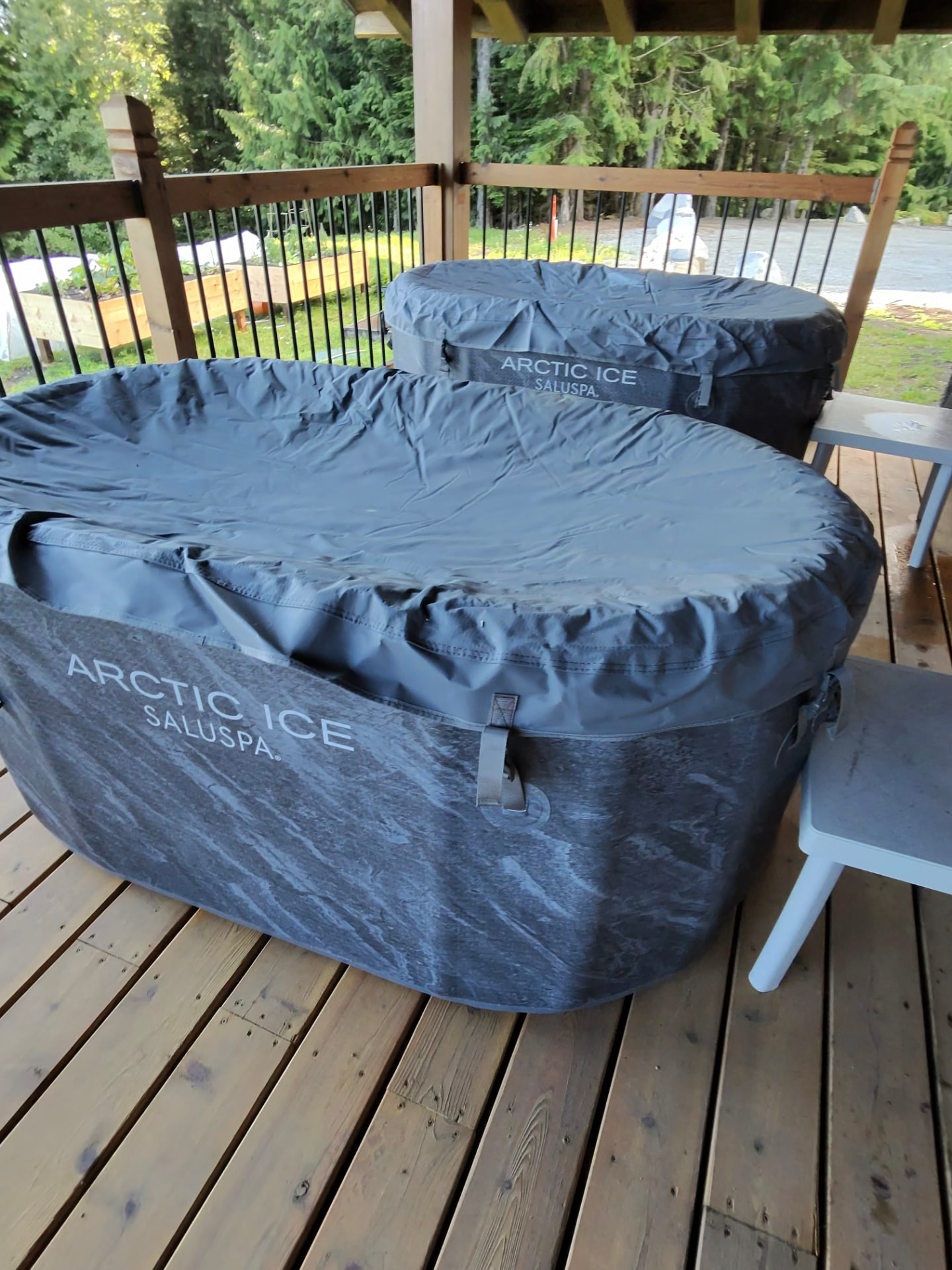
The tubs sit on the covered deck with the forest behind them, and residents use them alongside the gym, yoga and walking. The physical benefits are welcome. The reason they earn their place is different.
Recovery asks people to feel intense things without escaping them. Cold water is a controlled, time-limited, entirely safe version of exactly that demand. You get in, the alarm goes off, you slow your breathing, and you discover that you can be inside something difficult without acting on the urge to run. That rehearsal transfers.
It is supported activity, not treatment, and it is optional. Nobody at Halo Ridge is required to plunge, and anyone with a relevant medical history speaks with their physician first.
Common questions
Questions people ask about this
- How long should you stay in a cold plunge?
- One to three minutes at 10 to 15 degrees Celsius is enough for most of the reported effects. Beginners should start with thirty to sixty seconds. Longer is not better and increases the risk of hypothermia.
- Why do you gasp when you get in?
- That is the cold shock response, an involuntary reaction that peaks in the first thirty to sixty seconds. It is the main reason people drown in cold water, and it is why you enter slowly and control the breath rather than jumping in.
- Does cold water actually help mood?
- Cold exposure produces large rises in noradrenaline and dopamine, which explains the alertness and mood lift people report for a few hours afterward. Evidence for lasting effects on depression or anxiety is early and limited to small studies.
- Should I take a hot shower straight after?
- Better to warm up gradually with dry clothes, movement and a warm drink. Jumping straight into a hot shower can cause a sudden drop in blood pressure and dizziness.
- Is cold plunging safe?
- For healthy adults who enter slowly, stay briefly and are never alone, it is generally low risk. It is unsafe for people with heart conditions, uncontrolled blood pressure, epilepsy or during pregnancy, and it should never be done after drinking.
- Can cold plunging replace therapy or medication?
- No. It is a supportive practice that can help with alertness, sleep and the ability to stay steady under intensity. It is not a treatment for any condition, and it does not replace professional support.
Next steps
Where to go from here
- The property and setting
- Our live-in program
- What a sound bath actually is, and what happens in your body
A sound bath is a lie-down session of sustained tones from bowls and gongs. Here is what a session involves, what the research shows, and who finds it hard.
- Frequency healing and solfeggio frequencies: what the evidence says
Solfeggio frequencies, 432 Hz and vibroacoustic therapy explained honestly: where the claims came from, what studies exist, and where the claims outrun the data.
- Eating for repair: nutrition in the first year after alcohol or drug use
Appetite, blood sugar, protein and hydration in the first year of recovery, with a realistic week of meals and the reasons food changes how early sobriety feels.
Halo Ridge Recovery is a private live-in recovery program. We are not a hospital, medical facility, or licensed treatment centre. We do not provide medical care, detox or withdrawal management, prescribing, or diagnosis. Where those services are needed, we can help connect you with a third-party provider so support starts sooner rather than later.
If it is time to talk it through
Every enquiry is confidential. Speak with our admissions team about fit, timing, and what a stay at Halo Ridge would look like.